
Healing Isn’t a Vibe – It’s a Process

I sat on my meditation cushion this morning, watching the familiar parade of thoughts march through my mind while the early summer light filtered through my window. Twenty years ago, I would have berated myself for not achieving that elusive “empty mind” state that seemed to be the holy grail of spiritual practice. Today, at 52, I simply noticed the thoughts – some mundane, some weighty – and felt a gentle amusement at how predictably human I remain, despite decades of “working on myself.”
This is what healing actually looks like – not the carefully curated Instagram posts of serene women in flowing dresses holding crystals, not the breakthrough moments celebrated in workshop testimonials, but the quiet, messy, everyday practice of showing up for ourselves exactly as we are. It’s about time we had an honest conversation about this.
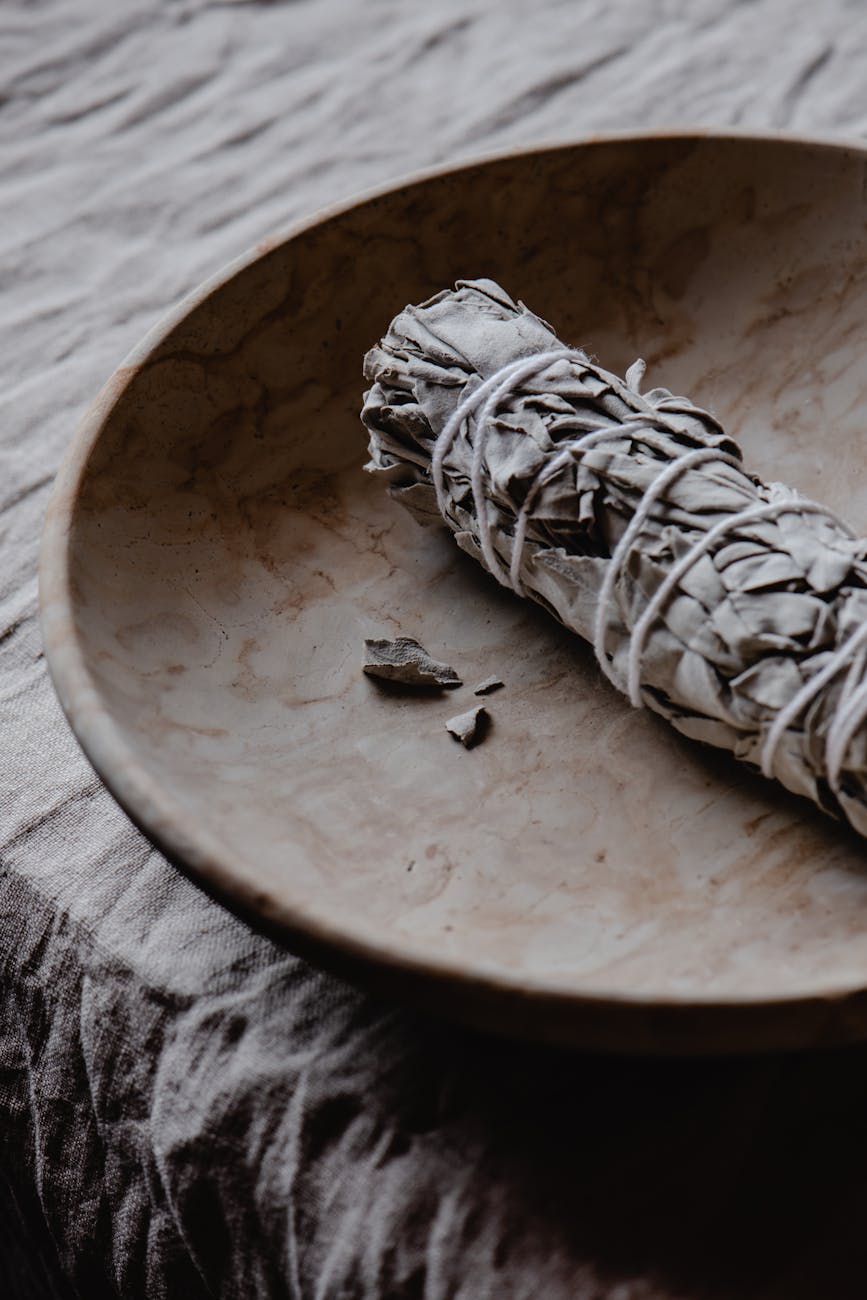
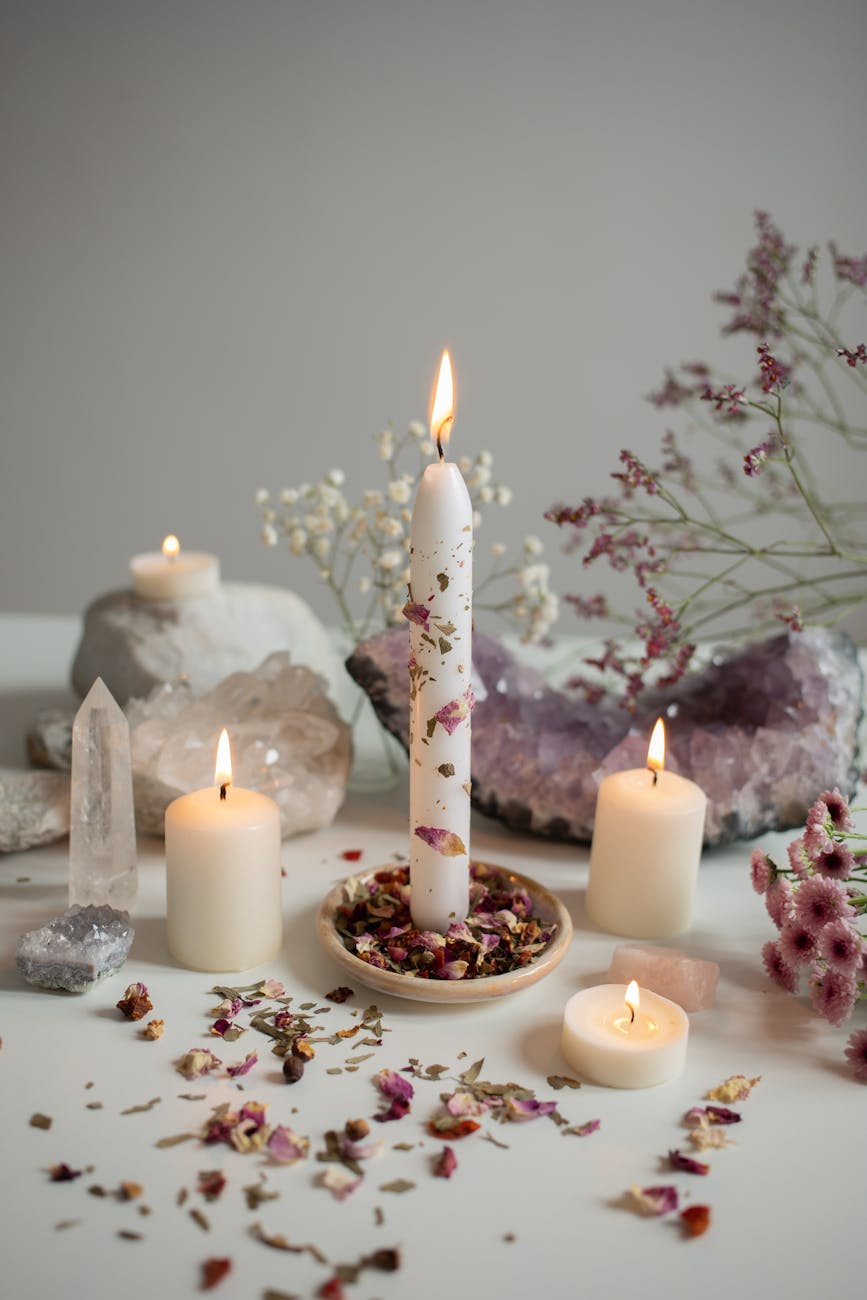
For those of us in midlife, particularly women who’ve spent years (or decades) on various healing paths, there can be an exhausting pressure to perform enlightenment – to demonstrate that all our spiritual work has transformed us into perpetually peaceful beings who float above life’s difficulties on a cloud of sage smoke and positive affirmations. We’re supposed to have transcended our wounds, mastered our triggers, and achieved some sort of cosmic graduation.
But here’s what I’ve learned: Healing isn’t a destination. It’s not even really a journey, if we’re being honest about that overused metaphor. It’s more like tending a garden – a continuous process of nurturing what nourishes us, weeding out what doesn’t serve, and accepting that some seasons will be more abundant than others. Sometimes the soil needs to lie fallow. Sometimes we have to start over after a storm. And that’s not failure – it’s nature.
The current spiritual marketplace often sells us a glossy version of healing that looks more like spiritual bypass than genuine integration. We’re told to “choose joy” when we’re grieving, to “raise our vibration” when we’re processing trauma, to “manifest abundance” when we’re grappling with systemic inequities. While there’s nothing inherently wrong with seeking joy or abundance, these oversimplified prescriptions can become another form of shame when we’re unable to positive-think our way out of genuine pain.
I remember the moment this really hit home for me. I was sitting in yet another workshop, surrounded by women earnestly nodding as the facilitator insisted that all our problems would dissolve if we just “stayed in our high vibration.” My mother had died three months earlier, and I was deep in the necessary darkness of grief. The suggestion that my mourning was simply a failure to “choose light” felt not only unhelpful but actually harmful – a spiritual gaslighting that denied the profound importance of fully experiencing our human emotions, even the difficult ones.
I remember the moment this really hit home for me. I was sitting in yet another workshop, surrounded by women earnestly nodding as the facilitator insisted that all our problems would dissolve if we just “stayed in our high vibration.” Meanwhile, my long-buried PTSD had begun surfacing with increasing intensity, making even simple daily tasks feel overwhelming. I was working overtime to maintain a façade of normalcy, showing up to work with a smile, posting inspirational quotes on social media, doing all the “right” things – but underneath, my body was speaking its truth through flashbacks and anxiety, demanding to be heard after years of pushing through. The suggestion that my struggles were simply a failure to “choose light” felt not only unhelpful but actually harmful – a spiritual gaslighting that denied the profound importance of fully experiencing our human emotions, even the difficult ones. My nervous system didn’t need more toxic positivity; it needed genuine acknowledgment, safety, and the space to process what happened.
What if, instead of trying to transcend our humanity, we embraced it as the very vehicle for our deepening? What if our sensitivity, our struggle, our seasons of doubt and darkness were not obstacles to overcome but integral parts of our wholeness?
Real healing, I’ve found, often looks like:
- Sitting with uncomfortable emotions without trying to fix or transform them
- Acknowledging our patterns without shame, but also without enabling them
- Developing discernment about which spiritual practices truly serve us versus those we do to prove our worthiness
- Building genuine self-trust rather than perpetual dependence on external guidance
- Creating boundaries that honor both our needs and our relationships
- Allowing ourselves to be works in progress rather than finished products
This approach requires a radical reframe of what “doing the work” means. Instead of constantly striving for breakthrough moments or peak experiences, we might find more sustainable transformation in the small, consistent choices we make in ordinary moments. It’s how we speak to ourselves when we make a mistake. It’s choosing self-compassion over self-improvement. It’s trusting our inner knowing even when it contradicts the latest spiritual bestseller.
I’ve noticed that many women arrive at midlife having accumulated an impressive spiritual toolkit – we can sage our space, pull oracle cards, analyze our birth charts, and recite affirmations with the best of them. But what many of us really hunger for is permission to be authentically ourselves, to tend to our wounds without pressure to “get over” them on anyone else’s timeline, to find our own rhythm of growth and rest.
This doesn’t mean abandoning all spiritual practice or rejecting the wisdom traditions that have sustained humans for millennia. Rather, it’s about developing a more mature, nuanced relationship with spirituality – one that can hold paradox, embrace mystery, and remain open to truth in all its forms. It’s about discerning which practices genuinely support our wholeness versus those that merely reinforce our conditioning around perpetual self-improvement.
Some questions I’ve found helpful in this discernment:
- Does this practice help me feel more embodied and present, or does it encourage disconnection from my lived experience?
- Am I doing this because it genuinely resonates, or because I think I “should”?
- Does this teaching make space for the full spectrum of human emotion and experience?
- Does this approach acknowledge systemic and collective influences, or does it reduce everything to individual choice?
- Can I bring my doubts, questions, and complications to this practice, or am I expected to present only my “high vibe” self?
The beauty of midlife is that we’ve lived long enough to know that quick fixes and magical solutions rarely create lasting change. We’ve tried enough trends and techniques to recognize what has real substance versus what simply repackages the same old pressure to be different/better/more. We’ve earned the wisdom to choose what works for us, even if it doesn’t photograph well for social media.
This isn’t about rejecting joy or dismissing the very real possibility of transformation. It’s about creating space for a more honest, integrated approach to healing – one that doesn’t require us to fragment ourselves into “spiritual” and “unspiritual” parts, or to constantly perform our evolution for others’ approval.
Some practical suggestions for cultivating this more authentic approach:
- Audit your spiritual practice for “shoulds” and obligations. Notice which elements feel genuinely nourishing versus performative.
- Create regular check-ins with yourself about what you truly need in this season of your life. The practices that served you in your 30s may not be what serve you now.
- Find or create communities that welcome your whole self – including your doubts, your struggles, and your perfectly imperfect humanity.
- Develop discernment about whose guidance you invite in. Does this teacher/author/guide make space for complexity and nuance? Do they acknowledge their own ongoing growth?
- Practice self-compassion not as a technique to get somewhere else, but as a way of being present with yourself exactly as you are.
- Notice where you might be using spiritual practice as a form of avoidance or bypass. What emotions or experiences are you trying not to feel?
- Give yourself permission to rest. Not everything needs to be transformed, transcended, or healed right now.
Remember that healing happens in spirals, not straight lines. We revisit similar themes at deeper levels, each time with more wisdom and compassion. The challenges that trigger us at 45 or 55 might echo wounds from earlier decades, but we meet them differently now. We bring all our lived experience, all our hard-won knowledge, all our capacity for nuance and complexity.
This is what makes midlife such a potent time for genuine transformation – not because we finally “get it all figured out,” but because we’ve lived long enough to embrace the mystery, to hold the questions, to trust the process even when it doesn’t look like we thought it would.
As Mary Oliver writes, “You do not have to be good. You do not have to walk on your knees for a hundred miles through the desert repenting. You only have to let the soft animal of your body love what it loves.”
Perhaps true healing lies not in transcending our humanity but in fully inhabiting it, with all its messiness and magic, its wounds and wisdom, its ordinary moments of grace.
For Reflection:
Take a quiet moment with your journal and consider: What would my healing journey look like if I released all pressure to “do it right” or reach a particular destination? What does my soul most deeply need in this season of my life? Let your response be as simple or complex as it naturally arises, without editing or judgment.
Trust that whatever emerges is exactly what needs to be heard right now.
Stay Connected
If this resonated with you, you’ll love my weekly newsletter, Sacred & Skeptical. It’s where I share deeper reflections, gentle prompts, and soul-aligned truths for women 40+ navigating healing, reinvention, and everything in between — without the fluff. Join the Sacred Newsletter here.


One Comment
Pingback: