Build Daily Rituals That Work for (Your) Real Life
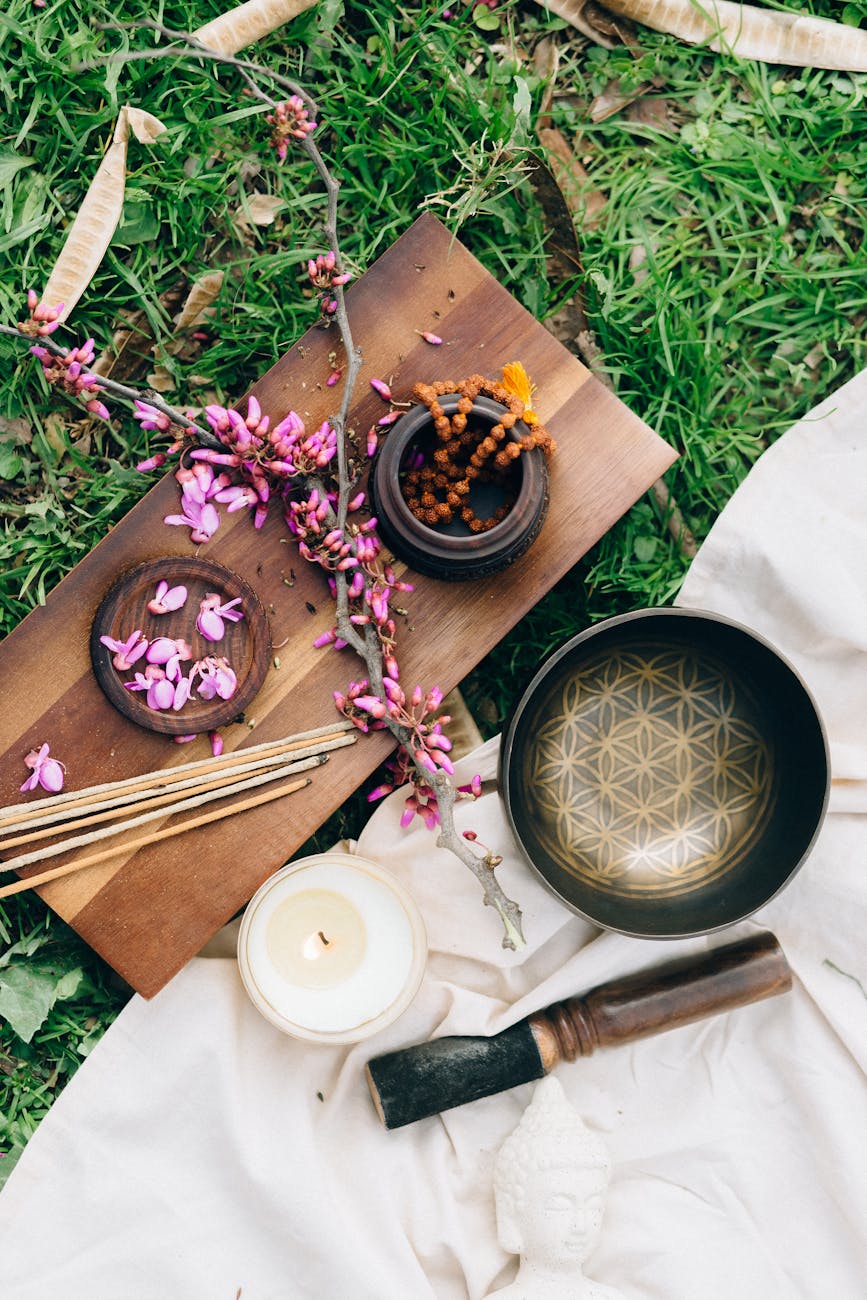
I spent years believing I wasn’t “doing spirituality right” because my practice didn’t look Instagram-worthy or match the elaborate ceremonies I read about in books. My altar was usually cluttered with half-empty tea cups and unopened mail. My meditation cushion gathered dust more often than it cradled my sits. And forget about those beautiful morning routines that spiritual influencers swear by – my reality involved throwing together breakfast while answering work emails and hoping I remembered to brush my teeth.
Forget the curated altars. This post will guide you on how to create simple, sacred rituals that genuinely support your nervous system and fit seamlessly into your schedule. Reflecting on a particularly challenging time, I was overwhelmed by the demands of managing my own life amidst difficult family dynamics that resurfaced childhood trauma, leaving me in a state of anxiety.
One afternoon, as I stood at my kitchen sink, mechanically washing dishes, I became aware of the warm water on my hands. In that moment, something shifted within me. My breathing deepened, my shoulders relaxed, and for a few precious minutes, I was fully present. I wasn’t planning, worrying, or burdening myself with endless expectations. This experience taught me the importance of finding moments of presence amidst chaos, a lesson I carry with me as I navigate life’s complexities.
The Myth of Perfect Practice
For years, I believed spiritual practice meant adhering to someone else’s prescription for enlightenment. I collected meditation cushions, crystals, and oracle cards. I tried to force myself into morning routines that felt more like spiritual performance art than authentic connection. Meanwhile, anxiety churned beneath my carefully constructed spiritual facade, and childhood wounds continued their quiet work of undermining my sense of safety.
It wasn’t until that moment at the kitchen sink – when presence found me rather than the other way around – that I began to understand: sometimes our most powerful rituals emerge from the very places we’re trying to escape.
The Reality of Nervous System Healing
Here’s what I’ve learned about creating practices that actually support us during challenging times: our nervous systems don’t care about Pinterest-worthy altars or perfectly executed ceremonies. What they respond to is consistency, simplicity, and authenticity.
When trauma surfaces (as it tends to do in midlife), our nervous systems need anchors that:
- Feel accessible even when we’re overwhelmed
- Don’t require special equipment or specific circumstances
- Can be practiced anywhere, anytime
- Honor our natural rhythms and limitations
Finding Your Natural Anchors
Start by noticing where you already experience moments of relief or connection in your daily life. These might be so simple you’ve overlooked their significance:
- The first sip of morning coffee
- Feeling the shower water on your back
- Walking to get the mail
- Washing dishes
- Folding warm laundry
- Watching birds at the feeder
These ordinary moments can become powerful ritual anchors because they’re already woven into the fabric of your life. No additional energy required – just awareness.
The Power of Micro-Moments
We often dismiss brief moments of presence as “not enough.” But when it comes to nervous system regulation and healing, these micro-moments matter tremendously. Each time we pause to feel our feet on the floor or notice our breath, we’re building neural pathways that support resilience.
Creating Sustainable Practice
Here’s how to develop rituals that actually stick:
- Start Where You Are
- Choose activities you’re already doing regularly. This removes the barrier of having to create space for something new.
- Keep It Simple
- The simpler the practice, the more likely you’ll maintain it when life gets challenging. Complex rituals often become burdensome rather than supportive.
- Honor Your Rhythms
- Notice when you naturally feel most receptive to practice. Some of us find clarity in the early morning, others come alive at night. Work with your natural patterns rather than against them.
- Build in Flexibility
- Create rituals that can adapt to changing circumstances. If your practice depends on specific conditions, it’s more likely to fall apart when you need it most.
When Trauma Surfaces
One of the challenges of midlife is that old wounds often choose this time to demand attention. As our roles shift and external pressures change, trauma we’ve carried for decades may suddenly feel more present.
This is where simple, embodied rituals become especially valuable. They can:
- Provide immediate grounding when emotions feel overwhelming
- Create safe containers for processing difficult feelings
- Offer consistent anchors during periods of uncertainty
- Support gradual nervous system regulation
Real-Life Examples
Here are some ways I’ve seen women transform everyday moments into meaningful practices:
Maria turns her morning coffee routine into a ritual of presence. Before checking her phone or starting her day, she takes five minutes to simply sit with her coffee, feeling the warmth of the cup in her hands.
Susan uses her daily shower as a cleansing ritual, deliberately letting the water carry away tension and worry. She keeps it simple – just feeling the sensation of water and taking a few conscious breaths.
Jenny transformed her commute into contemplative time by choosing one red light each day to practice full presence – feeling her seat, noticing her breath, observing without judgment.
When Resistance Appears
It’s normal to encounter internal pushback when establishing new patterns, especially if you’ve experienced trauma. You might notice:
- Feeling like you’re not doing enough
- Comparing your practice to others’
- Struggling with consistency
- Judging yourself for choosing simple rituals
When this happens, remember: resistance often points to places where gentle attention is needed. Rather than pushing through, try:
- Acknowledging the resistance without judgment
- Scaling back to something that feels more manageable
- Remembering that small steps count
- Treating yourself with the same compassion you’d offer a friend
The Practice of Return
Perhaps the most powerful ritual is simply returning to presence again and again. This isn’t about maintaining unbroken awareness or achieving some ideal state. It’s about developing the capacity to begin again, to find our way back to center even after getting lost.
Creating Your Own Path

As you explore building rituals that work for your real life, consider:
- What simple activities already bring you moments of peace?
- Where do you naturally find yourself slowing down?
- What practices have supported you during difficult times?
- How could existing routines become more intentional?
Remember: Your spiritual practice doesn’t need to look spiritual to be sacred. Sometimes the most profound connections happen while washing dishes or watching the sun set or feeling your feet on the earth.
A Gentle Invitation
If you’re feeling called to explore this further, here’s a simple journaling prompt:
Think about a moment in your day when you naturally slow down or feel more present. It might be something as simple as making your bed or waiting for coffee to brew. Write about this moment without trying to make it into anything special. Just notice:
- What sensations are present in your body?
- What helps you feel grounded in this moment?
- What makes this time different from other parts of your day?
There’s no need to turn this into a formal practice unless that feels right to you. Sometimes simply noticing what already works is enough.
P.S. Notice what arises as you read this – resistance, relief, skepticism, hope. All of these responses offer valuable information about what you truly need right now.
Want to read about “What no one tells you about starting over at 50”? Click here.
Like what you just read?
Join me over on Sacred & Skeptical, my weekly Substack letter for women 40+ who are ready to heal honestly, grow slowly, and ditch spiritual performance.
Subscribe now for grounded essays, gentle prompts, and a little truth for your inbox each week.
Click here to subscribe

You May Also Like

I Didn’t Need Another Morning Routine. I Needed to Feel Safe.

What Soulful Work Looks Like in Midlife (and What It Doesn’t)