My Approach to Food
My Approach to Food
For a long time, food felt complicated.
Not because food itself is complicated. A potato has never once asked me to define my worth before entering a soup. A carrot is not standing at the counter with a clipboard, judging my life choices. Food is actually fairly honest that way. It grows, nourishes, comforts, spoils if ignored, and occasionally rolls under the fridge where it begins a new life as a small archaeological mystery.
The complicated part was everything I had been taught to attach to food.
Rules. Shame. Punishment. Perfection. Good days and bad days. Starting over on Monday. Eating as proof of discipline. Not eating as proof of control. Food became something to manage, measure, earn, restrict, explain, apologize for, or use as evidence against myself.
I am tired of that.
Healing Kitchen grew from a different place. A gentler place. A more practical place. A place that asks: What if food is not another way to fix myself? What if it is one of the ways I care for myself?
That question changed something for me.
My approach to food is plant-forward, anti-inflammatory, flexible, and rooted in real life. Not perfect life. Not glowing influencer kitchen life where every jar has a handwritten label and the fridge looks like it has never hosted a suspicious cucumber. Real life. Tired days. Busy days. Anxious days. Days when cooking feels peaceful, and days when stirring a pot of soup feels like a heroic act worthy of a small parade.
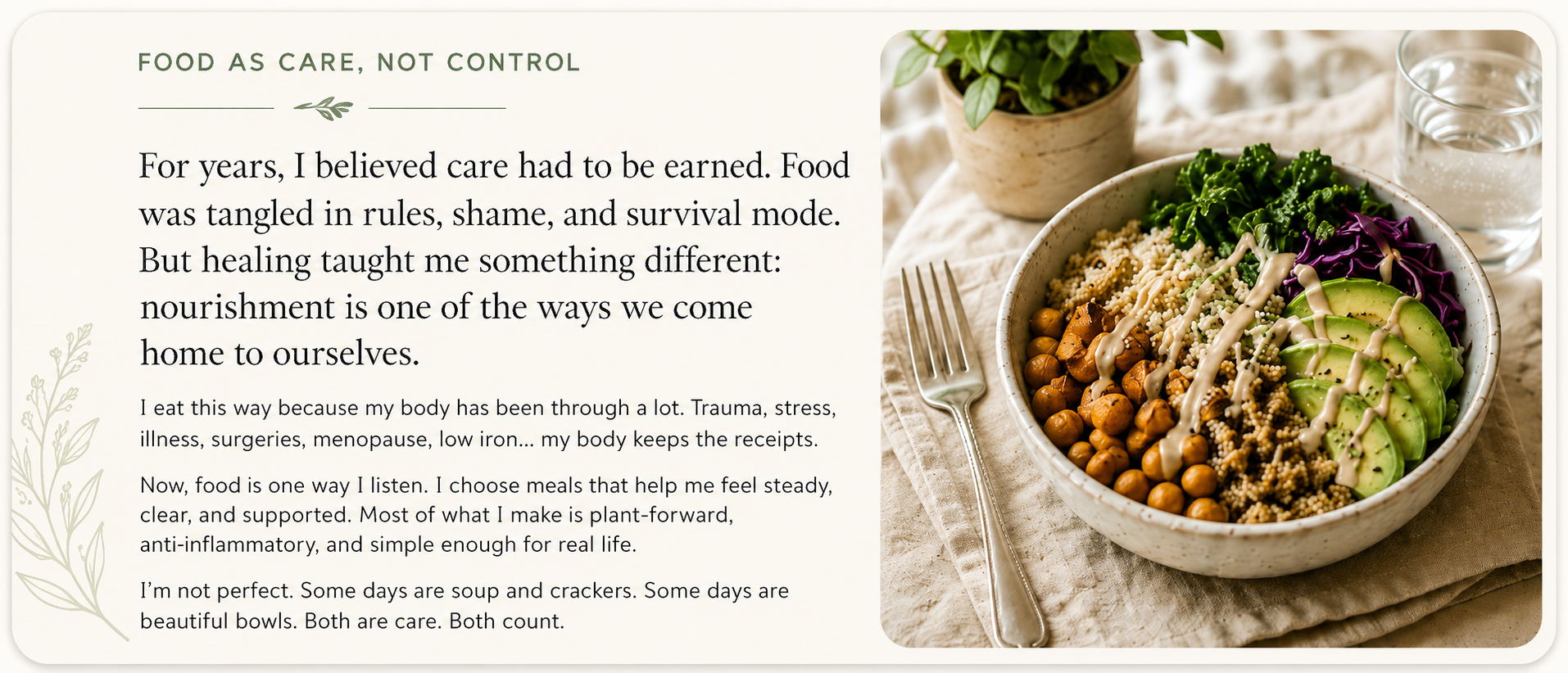
I eat this way because my body has been through a lot. Trauma, stress, illness, surgeries, menopause, low iron, weight changes, and years of living in survival mode all taught me that the body is not separate from the life we have lived. It carries the history. It keeps the receipts. Sometimes it whispers. Sometimes it throws the whole filing cabinet down the stairs.
For me, food has become one way of listening.
I feel better when I eat more plants. More fibre. More beans, lentils, oats, vegetables, fruit, greens, herbs, spices, and meals that feel steady rather than dramatic. I feel better when food supports my energy instead of sending me into a fog. I feel better when meals are simple enough that I can actually make them, nourishing enough that my body recognizes the effort, and flexible enough that I do not turn the kitchen into another place where I am failing.
That matters to me.
Because healing should not require perfection.
I am not interested in food rules that turn every meal into a moral exam. I do not want a life where a muffin has more power than my own common sense. I do not want to spend the rest of my years negotiating with salad dressing as though it holds the keys to my character.
So Healing Kitchen is not about purity.
It is about nourishment.
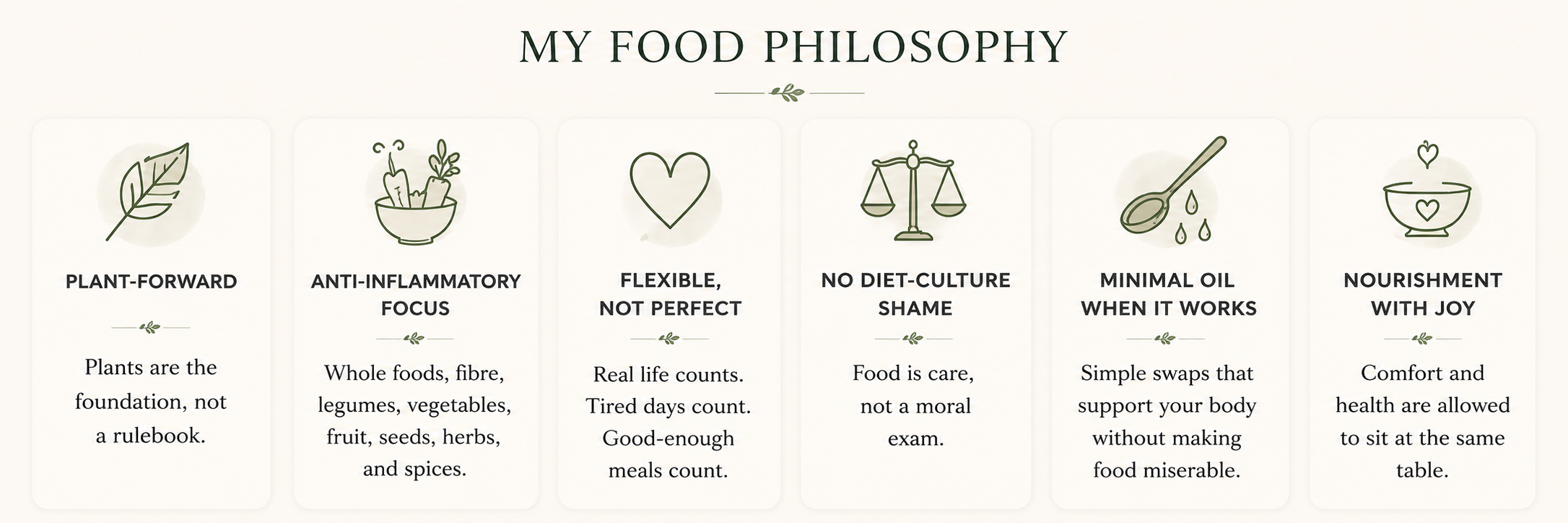
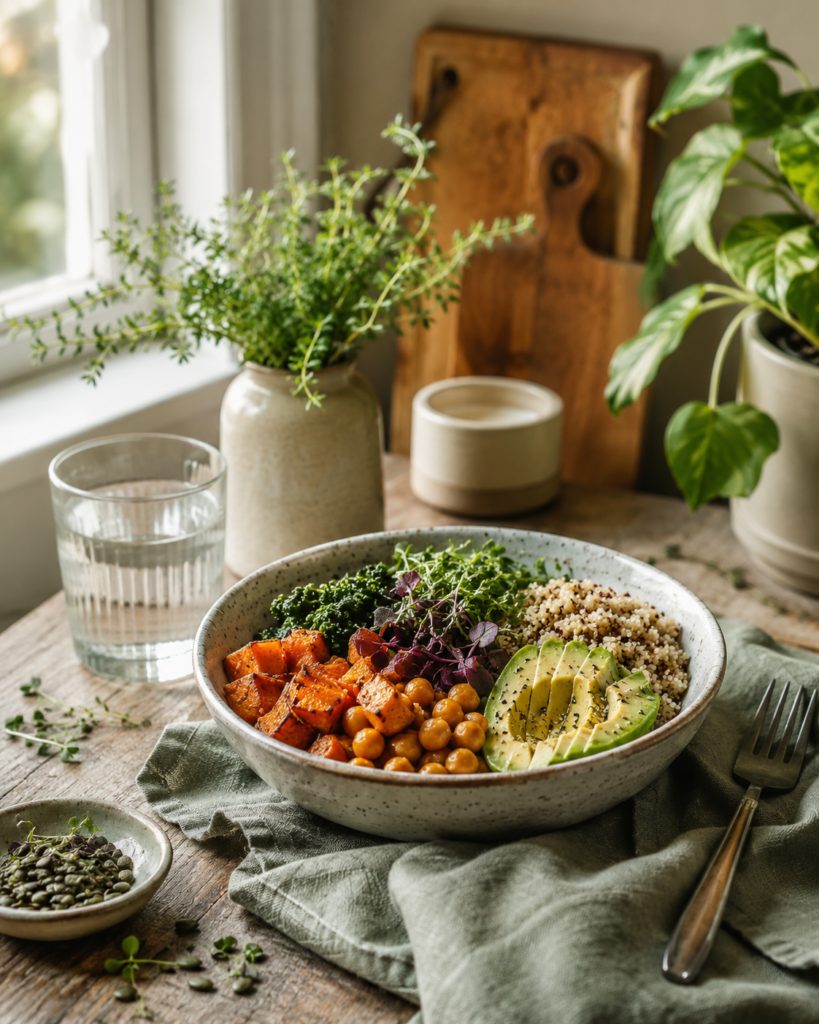
Most of what I make is plant-forward. That means plants are usually the foundation: vegetables, legumes, grains, seeds, fruit, herbs, and all the lovely little things that make a meal feel alive. But plant-forward does not mean rigid. It means direction, not prison.
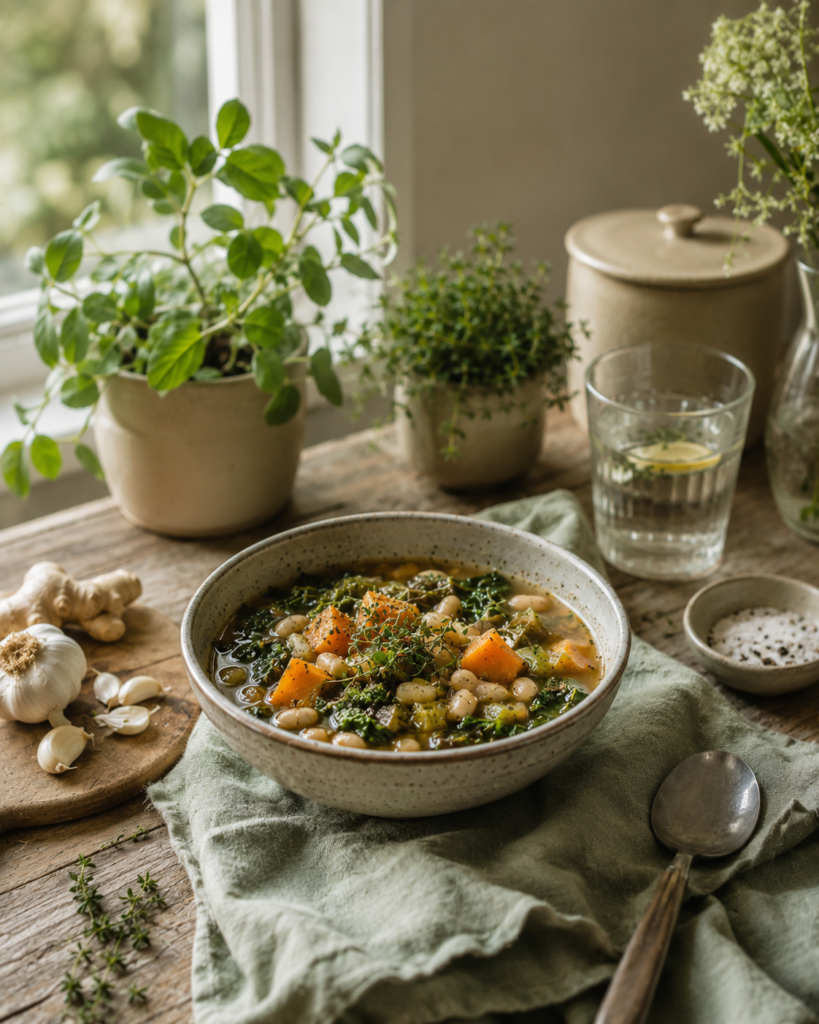
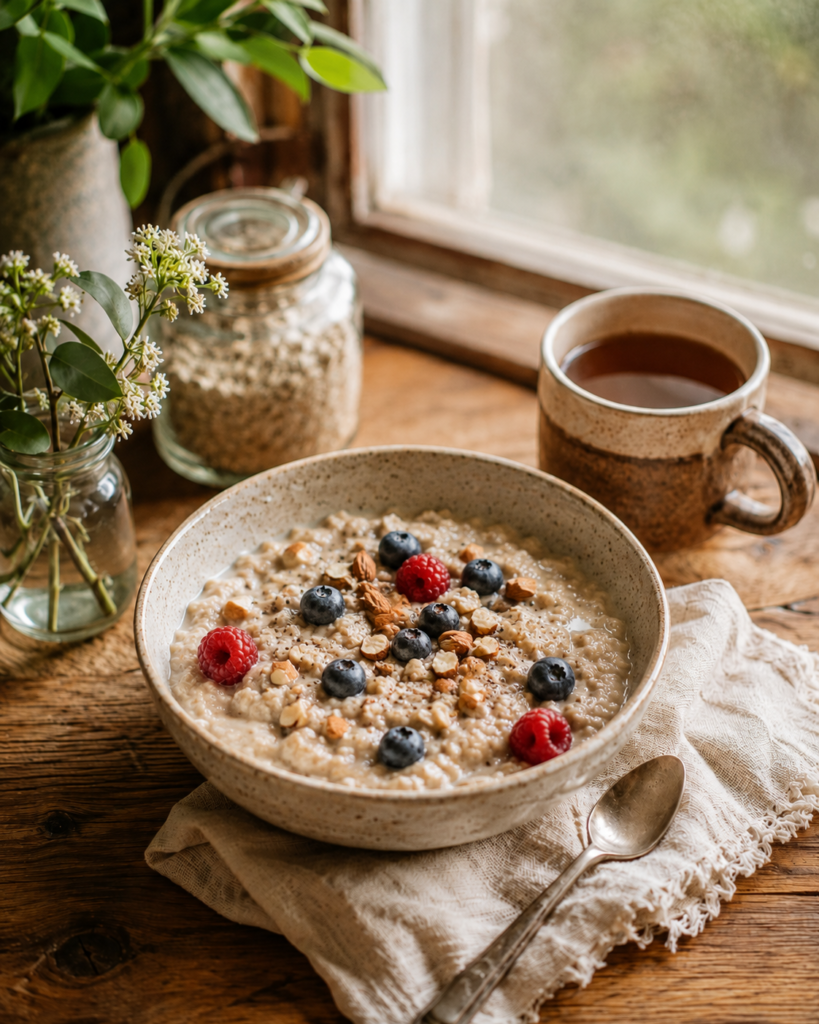
I also lean toward anti-inflammatory eating because I want my food to support my body, especially after years of stress and illness. For me, that often means simple meals with whole ingredients. Soups. Bowls. Oats. Roasted vegetables. Lentils. Beans. Berries. Flax. Hemp hearts. Greens tucked into everything like tiny edible optimism.
I often reduce or avoid added oil, not because oil is evil, but because I have learned what feels best in my body and what supports my goals. I use applesauce in baking when it works. I add ground flax and hemp hearts when I can. I swap ingredients. I improvise. I make recipes more nourishing without making them miserable, which is an underappreciated kitchen skill.
No one needs a brownie that tastes like punishment.
No one.
Food should be allowed to be comforting. I believe that deeply now. Comfort is not the enemy of health. Sometimes comfort is what makes care possible.
A warm bowl of soup can be care. A weekend brunch can be care. A picnic packed with muffins, fruit, tea, and something sturdy enough to survive a gravel road can be care. A simple rice bowl on a tired Tuesday can be care. A snack eaten before you are shaking with hunger can be care. A meal made without shame can be care.
This is the part I am still learning.
For years, I thought care had to be earned. Rest had to be earned. Joy had to be earned. Food was tangled in that same old survival thinking. Be good first. Be disciplined first. Be smaller first. Be better first.
But the body does not heal because we scold it into submission.
The body heals best when it feels safe enough to stop bracing.
That does not mean I always get it right. I am not floating through my kitchen in linen, blessing chickpeas under a beam of divine light. Some days I am tired. Some days I forget what I planned. Some days the meal is assembled from whatever is available and held together by hope and a tortilla. Some days I eat beautifully. Some days I eat adequately. Some days “nourishment” looks like making sure there is soup in the fridge before the week becomes feral.
That is real life.
And real life belongs in the kitchen.
Healing Kitchen is where I share the meals, recipes, experiments, and small food rituals that help me feel cared for. It is not a diet plan. It is not a wellness performance. It is not a promise that lentils will repair your childhood or that overnight oats will turn you into a serene woodland person with excellent boundaries.
Though, frankly, overnight oats do try their best.
This is simply how I am learning to feed a body I spent too many years criticizing, ignoring, pushing, shrinking, dragging, and expecting to keep going no matter what.
Now I want food to feel different.
I want it to feel like steadiness, warmth and dignity. Like a way of saying, “You are allowed to be cared for, even here, even now, even before you become anything else.”
That is my approach to food.
Plant-forward, but flexible.
Anti-inflammatory, but not obsessive.
Nourishing, but not joyless.
Practical, but still beautiful.
Healthy, but not complicated for the sake of sounding impressive.
Because food is not just fuel. It is one of the ordinary ways we return to ourselves.
And I am learning, slowly, that returning to myself does not have to taste like punishment.
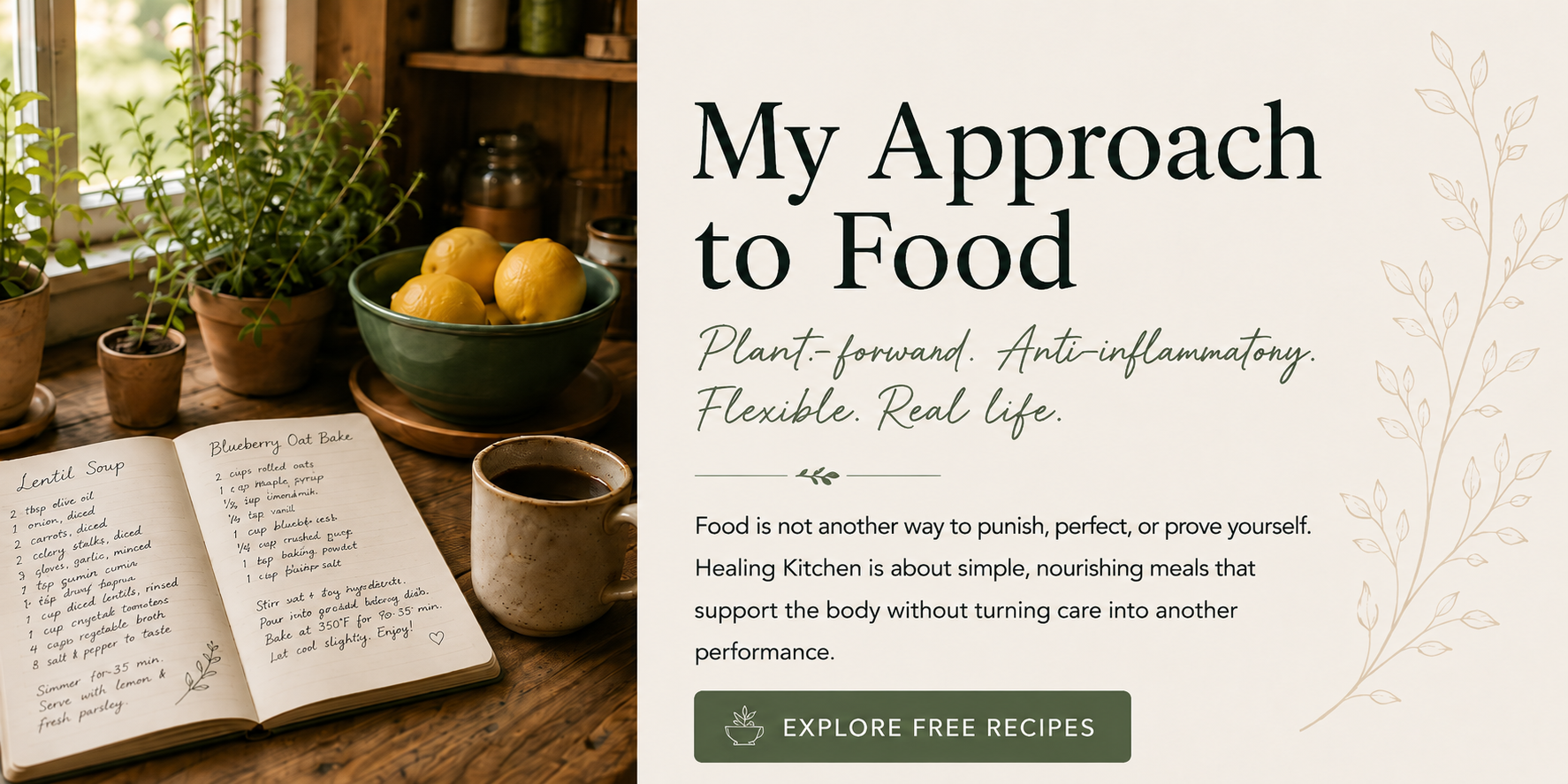
Sometimes it tastes like lentil soup.
Sometimes it tastes like blueberry oats.
Sometimes it tastes like chickpea brownies that have no business being as good as they are.
And sometimes, if the day calls for it, it tastes like an apple fritter worth driving two hours for.